Showing posts with label Pictures. Show all posts

Sunday, February 2, 2014

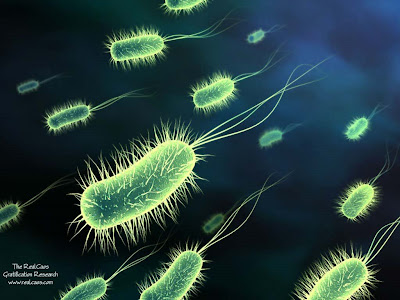
Deadly Viruses

deadly_viruses_900

 http://www.mphonline.org/

They aren’t living, or non-living: They’re the perfect parasites
Viruses are everywhere
Over 5,000 have been described in detail
Millions and Millions Exist
When they’re in the air, or on a doorknob
They’re inert = about as living as a rock.
When they come into contact with host cells
They trigger the cell to engulf them
Or fuse with the cell
Then use the cell’s machinery to reproduce

What is a virus?

Just a tiny bundle of RNA or DNA and a shell.
That uses host cells to reproduce itself.
And manifest some of the scariest illnesses on the planet.
HIV: the mass killer
Yearly Mortality: 3.1 million
Total Mortality: 25 million+ since 1981
How it works:
Invades important immune system cells and kills them.
Leaves patient open to death by other illnesses with lowered immune function.
Ebola: the rapid killer with no cure
Yearly mortality: Mortality rate: 90% within days[3]
How it works:
[3]Disables tetherin, a protein that disables the spread of the virus from cell to cell. Spreads rapidly to cause hemorrhaging, extreme fever, and death.
Rotavirus: the child-killer
Yearly Mortality:>500,000 children
How it works:
Spread through fecal-oral exposure, often through play surfaces or contaminated water. Diarrhea, vomiting, and abdominal pain can be deadly, particularly in the developing world.[4]
Smallpox: the monarch killer
Mortality rate: Eradicated
20th century mortality rate: 300-500 million
80% of infected children died
20-60% of infected adults.
How it works:
Localizes in the blood vessels of the skin and in the mouth and throat. One of two infectious diseases to be eradicated by humans. Ravaged populations from 10,000 b.c.- 1979. Killing 5 reigning monarchs in the 1700′s.
Hepatitis B: killing your liver
How it works:
The virus enters the bloodstream and heads for the liver. Once in the liver many other viruses activate and spread.[6]
Influenza: the pandemic that’s still around
Yearly Mortality: 500,000 deaths
Pandemics occur around 3 times a century.
How it works:
Attaches itself to receptors on cells in the lungs and air passages. As it takes over their machinery, the cells die. Dead cells cause runny nose, sore throat, and other symptoms.
Hepatitis C
Yearly Mortality: 56,000 deaths
200-300 million people infected.
How it works:
“Hepatitis” means inflammation of the liver, and it is in the liver where the Hepatitis virus replicates itself.
70% of patients develop chronic liver disease.[7] 15% cirrhosis
5% die from liver cancer or cirrhosis
Measles
Yearly Mortality: 197,000 deaths
Over last 150 years: 200 million deaths
How it works:
One of the most contagious viruses. Causes rash, high fever, and for weakened immune systems can be deadly.
Hantavirus: Because rats are dirty
yearly mortality: 70,0000 deaths
How it works:
Spread through rodent bites, droppings, or aerosolized rodent fecal matter. Can cause hemorrhaging and death.
Yellow Fever:The reemerging killer
Yearly Mortality: 30,000 deaths
How it works:
An acute hemorrhagic disease sometimes causing jaundice and living damage.
Dengue Fever: the break-bone fever
yearly mortality: 25,000 deaths
How it works:
[8]Spread by mosquitoes. Leads to severe pain in muscles, joints, and behind eyes. Occurs primarily in urban tropical areas.
Rabies
yearly mortality: 55,000 deaths
How it works:
[9]Enters the body and proceeds to the brain, replacing nerve cells in the process. By proceeding through the salivary glands it increases salivation, causing foaming at the mouth. This helps the virus spread through saliva. The most common form is the encephalitic or “furious” form of rabies in which agitation and aggression is heightened.
Viruses are aren’t truly even alive, but without proper care they can take your life.
deadly_viruses_300

Wednesday, December 25, 2013

Killer whales dazzle in hourlong show off L.A.; ‘Like SeaWorld without the tanks’

The Big Blue An Outdoor // Nature Blog

Wild orcas leap and and splash in close proximity of awed researchers during the mammals' third consecutive holiday season visit to Southern California

killerwhale
Photo showing young orca named Comet is courtesy of ©Eric Martin
Killer whales are at the center of a broiling SeaWorld controversy, thanks to “Blackfish the Movie,” which has shed light on how the iconic mammals are treated in captivity.
Many are boycotting SeaWorld parks. Animal rights advocates have arranged on-site protests, and several entertainers have canceled shows in opposition to SeaWorld’s captive killer whale programs.
1-CA51s-Spyhop-2013Dec23-AlisaSchulmanJaniger-IMG_4558-c2-wm
Photo showing spyhopping orcas is courtesy of ©Alisa Schulman-Janiger. She also provided the following four images for this story
SeaWorld’s shows continue, however, the park insisting that its orcas are ambassadors who foster appreciation of the ocean and its critters.
But this week off Los Angeles, four wild killer whales proved emphatically that their most spectacular shows are those performed willingly in the wild, and that fishy treats are not required for them to leap and splash.
Alisa Schulman-Janiger, a killer whale researcher, and Eric Martin, a marine biologist, on Monday afternoon were witness to a show both said they will never forget.
6-CA51s-2013Dec23-AlisaSchulmanJaniger-IMG_4890-c2-wm
Chorus-line greeting
“It was like SeaWorld without the tanks,” joked Martin, co-director of the Roundhouse Marine Studies Lab and Aquarium at the end of Manhattan Beach Pier.
The encounter began nine miles west of Redondo Beach, with what Schulman-Janiger described as “a chorus line greeting,” and ended an hour later a bit farther to the north.
The killer whales breached and spyhopped, surfed wakes created by the moving boat, and played beneath the vessel.
4-CA51s-L-2013Dec23-AlisaSchulmanJaniger-IMG_4781-c2-wm
They even killed a smaller mammal–most likely a common dolphin–and celebrated with more acrobatics.
“They often do that after a kill,” Schulman-Janiger said, adding that this marks the third consecutive year these particular killer whales have appeared off Los Angeles during the holiday season. (Their home turf seems to be Monterey Bay in Central California.)
The orcas are family members that include the matriarch cataloged by Schulman-Janiger as CA51, a 15-year-old male (CA51B), a 10-year-old male (CA51C), and a 3-year-old female (CA51D), who is named Comet because of her unusual eye patches.
7-CA51s-R-2013Dec23-AlisaSchulmanJaniger-IMG_4927-c2-wm
They’re part of a group of transient killer whales that are known to be boat friendly (CA51C  was nicknamed “Bumper” by Schulman-Janiger last December after it gently belly-bumped Martin’s boat during a lengthy encounter).This group, more than any other, has widened its range to include Southern California, presumably to prey on common dolphins.
It used to include CA51′s 21-year-old daughter, who has formed a separate sub-pod with her two offspring.
Monday’s sighting was the fifth in four weeks of the CA51 group off the Los Angeles/Long Beach area. The sighting was first made by volunteers with the ACS-LA Gray Whale Census and Behavior Project at Point Vicente on the Palos Verdes Peninsula.
2-CA51s-L-2013Dec23-AlisaSchulmanJaniger-IMG_4644-c2-wm
That inspired Schulman-Janiger and Martin to embark on a search aboard his 18-foot boat.
They spotted a tall, black dorsal fin at 3:07 p.m. and 13 minutes later were surrounded by orcas.
“They approached and came right at us and stopped all together,” Schulman-Janiger said. “It was like a chorus-line greeting. They swam under and around our boat and poked their faces out of the water. They did this five or six times.”
When Martin would run his boat the killer whales would surf in its wake, the largest male a mere inches from the transom. When the boat stopped, the mammals surrounded the boat and resumed playing around and beneath the vessel, poking their heads out of the water for a closer look at their visitors.
Said Martin: “They were making eye contact with us, not just the boat. They were looking into our eyes, the way a human does. I don’t see how it can get any better.”
Perhaps this act could be labeled, “Blackfish, Wild and Free.”
–Find Pete Thomas on Facebook